The Bible, Mapped by Meaning
King James Version · 66 books · 31,102 verses
Every verse of the King James Bible is a point in 3D space. Verses that say similar things sit close together. A language model read each verse, and the layout comes from what the words mean.
Open the map · I made this on January 25, 2026. The code is on GitHub at gateak/sacred-texts-explorer.
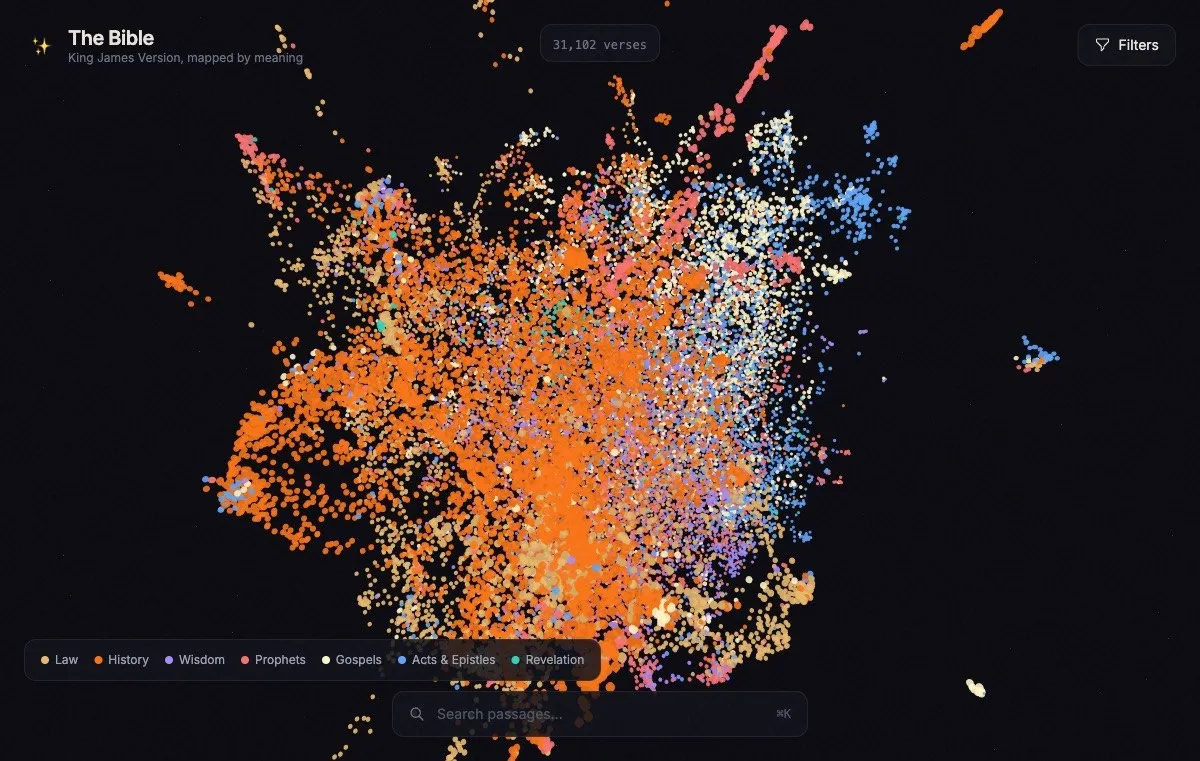
● Law · ● History · ● Wisdom · ● Prophets · ● Gospels · ● Acts & Epistles · ● Revelation
Things to try
- Drag to orbit and scroll to zoom. Hover a dot to read the verse; click it for the full text.
- Search a word like shepherd or a reference like John 3. Matching verses stay lit and the rest fade.
- Open Filters to show one section at a time, or recolor every verse by joy, sadness, fear, anger or overall sentiment.
A few things the data shows
The Prophets score angriest of the 7 sections (average anger 0.24, against 0.13 for Acts & Epistles). Amos, Micah and Lamentations are the 3 darkest books by sentiment.
The brightest books are Ezra and 1 Chronicles, mostly because long lists of names read as neutral. Philippians comes next, and it’s the first one with real prose.
How it was made
- The KJV text from Project Gutenberg, split into 31,102 verses and tagged with book, chapter and verse.
- Each verse becomes a list of 384 numbers with the all-MiniLM-L6-v2 sentence model. Similar meanings give similar numbers.
- UMAP squeezes those 384 dimensions down to 3 while keeping close neighbors close.
- An emotion model (j-hartmann/emotion-english-distilroberta-base) scores each verse.
- React and Three.js draw all 31,102 points in one instanced mesh. It’s a static site on Cloudflare.
The models were trained on modern English, so they read 400-year-old phrasing imperfectly. Distance on the map reflects wording and topic as a model sees them. The emotion scores lean negative across the whole text, so compare books against each other.